|
|
StaphMeeting A Workshop on Rove Beetles |
|
|
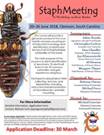
Course Flyer
Bonus Material
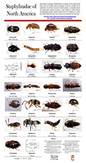
North American Staphylinidae Poster
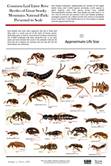
GSMNP Litter Staphs Poster
|
Where: Clemson, South Carolina [map] When: 20–26 June 2018 Application Deadline:
DEADLINE EXTENDED!! A few places remain! First come, first served to qualified applicants. Final Deadline 27 April 2018.
General Description
The course will provide a general overview of the Rove Beetle Universe, covering an introduction to ecology and identification of all 32 Staphylinidae subfamilies of the world, plus an overview of known larvae. Emphasis, including practical use of keys, will be placed on North American taxa.
The main purpose of the course is to aid in identification of specimens. Students will learn to sight ID common subfamilies (it can be done!) and gain experience using keys.
The workshop will consist of lectures and laboratories, including demonstration of microdissection (this can also be done!) and slide mounting, and some field collecting.
A very unique opportunity. Staphylinidae is the largest family in the world with 63,000+ species. They are nearly ubiquitous across the terrestrial landscape, represent some of the most numerous micro-predators in forest systems, contain hundreds of myrmecophilous species, thousands of undescribed species, are woefully underutilized in ecological studies, and are a lot cooler than weevils. StaphMeeting is the first and only rove beetle workshop of its kind in the world.
Instructors
Adam Brunke Agriculture and Agri-Food Canada
Louisiana State University Donald Chandler University of New Hampshire David
Clarke University of Memphis Jan Klimaszewski Natural Resources Canada Alfred Newton Field Museum of Natural History Margaret Thayer Field Museum of Natural History
Organized by: Brittany Owens Louisiana State University Michael Ferro Clemson University Hosted by: Michael Caterino Clemson University Arthropod Collection
Preliminary Schedule*:
Day 0 (19 June). Participants and instructors arrive.
Day 1 (20 June). General course introduction, overview of the family, etc. Introduction to Staphylinidae, synopsis of world adults and (known) larvae (subfamily level). Review of 10 “small” subfamilies. Laboratory with emphasis on subfamily identification. Introductory group dinner.
Day 2 (21 June). Review of 12 “small” subfamilies. Afternoon and evening lab time.
Day 3 (22 June). Review of Omaliinae and Oxytelinae. Afternoon and evening lab time.
Day 4 (23 June). Review of Paederinae and Staphylininae. Afternoon and evening lab time.
Day 5 (24 June). Review of Aleocharinae, microdissection demonstration. Afternoon and evening lab time.
Day 6 (25 June). Review of Pselaphinae and Scydmaeninae. Afternoon and evening lab time.
Day 7 (26 June). Review of Scaphidiinae, Tachyporinae, Leptotyphlinae. Afternoon and evening lab time. Closing dinner and awards.
Day 8 (27 June). Participants and instructors leave.
*The schedule will certainly change. The lab will be available each evening for late night study, and evening collecting expeditions will be available. Several short collecting/touring trips may take place as time permits.
Application, Fees, Etc.
The course is limited to 22 lucky students.
How to Apply? Complete the Application Form Send it to Michael Ferro (staphmeeting@gmail.com)
Application Deadline: 30 March 2018
Course Fee: The course fee is US$1200 (a bargain!) which covers housing the night of 19 June through the morning of 27 June, all meals, ID materials, and lab supplies.
Etc.: Study specimens will be provided but students are encouraged to bring personal unknown specimens for use in lab IDing exercises. (Get your IDs confirmed by the experts!)
Questions:
Email Michael Ferro (staphmeeting@gmail.com)
|
FAQs Who can apply? StaphMeeting is open to all interested
individuals (professionals, motivated amateurs, academics (undergrad, grad, postdocs, professors), etc.). A working knowledge of
basic entomological techniques is required. Tell me about accommodations at StaphMeeting. Participants will be staying at Thornhill Village
on Clemson University Campus, within walking distance of the classroom,
cafeteria, and downtown Clemson. Thornhill village consists of two-bedroom
apartments with a shared kitchen, bathroom, and living area. Each participant
gets a private room. |
|
|
|
|